May 5, 2026
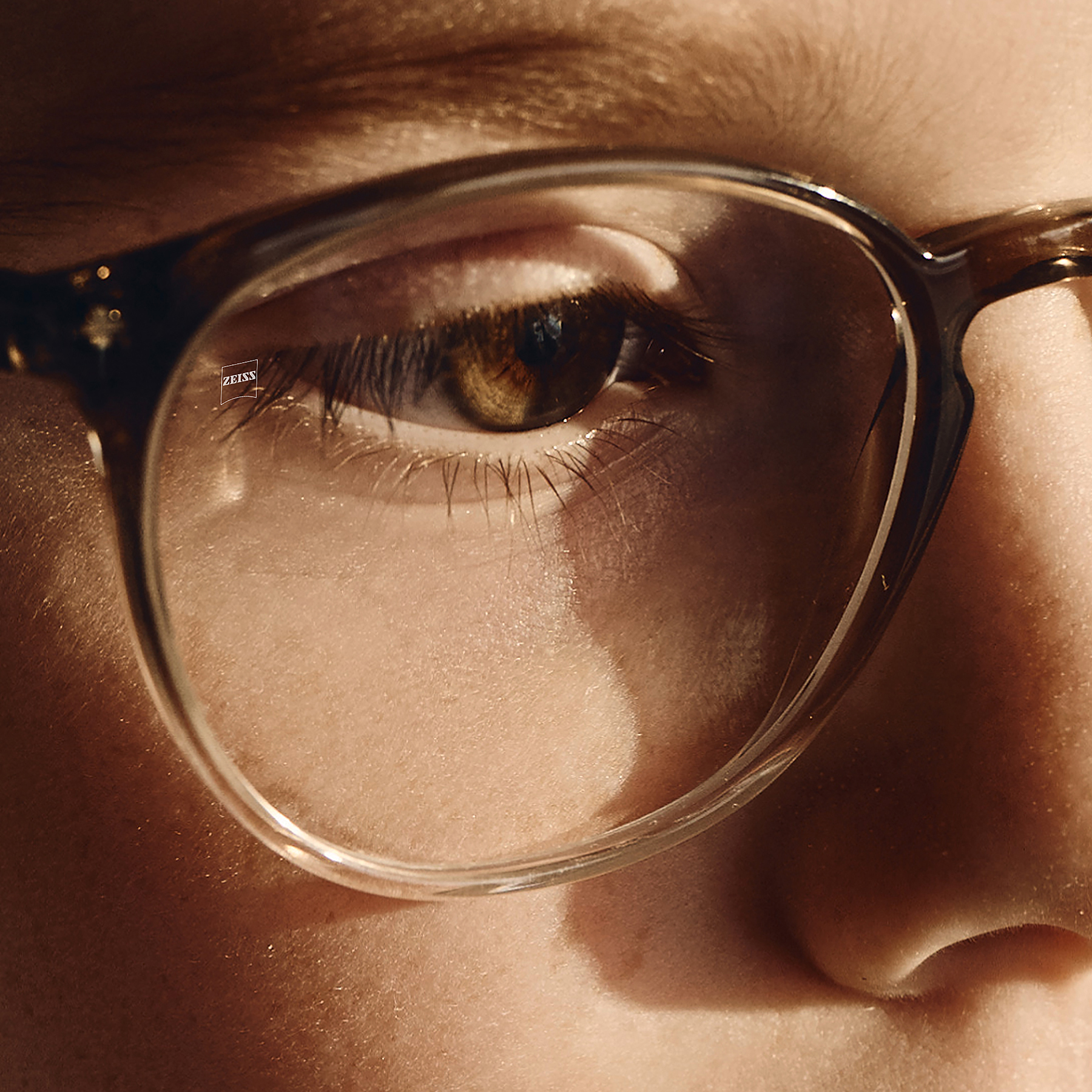
Photo provided by ZEISS Vision Care
AALEN, Germany — ZEISS Vision Care presented the latest findings on the MyoActive spectacle lenses at the Association for Research in Vision and Ophthalmology (ARVO) 2026 Annual Meeting.
New interim study data from ZEISS’s myopia control portfolio shows ZEISS MyoActive demonstrating high efficacy in slowing myopia progression. In addition, ZEISS presents first clinical insights on ZEISS MyoEase lenses, as well as the latest clinical results from the established ZEISS MyoCare portfolio.
- Interim results for the novel ZEISS MyoActive spectacle lens demonstrate robust efficacy, significantly slowing myopia progression over six months.
- One-year cross-over data for ZEISS MyoEase showed a high responder rate, delivering significant reductions in refractive error progression and axial elongation—with no evidence of rebound after switching back to single vision lenses.
- Three-year multi-center results for the ZEISS MyoCare portfolio confirm sustained long-term benefits in slowing myopia progression.
ZEISS MyoActive: A novel lens design for myopia management
ZEISS MyoActive lenses use innovative defocus patterns to reduce neural adaptation and maximize treatment efficacy. After six months of lens wear, children wearing ZEISS MyoActive lenses showed minimal change: 0.13D and 0.02mm progression on average. This represents a substantial reduction in both refractive error and axial length growth of 0.38D and 0.15mm on average compared to single vision (SV) lenses, highlighting ZEISS MyoActive’s high efficacy.1
“ZEISS MyoActive represents a major step forward in spectacle-based myopia management,” says Prof Padmaja Sankaridurg, who presented the study results for ZEISS. “The evidence is so strong that it makes ZEISS MyoActive the perhaps most important addition to ZEISS’s myopia management portfolio.
ZEISS MyoEase lenses are an effective tool for myopia management
Clinical results from a one-year cross-over trial in Asia show that ZEISS MyoEase spectacle lenses significantly slow myopia progression as compared to SV lenses, with no indication for a rebound effect as children switched back to SV lenses.2 Averaged across the two stages of the cross-over trial, the difference of progression between ZEISS MyoEase and SV lenses for spherical equivalent refractive error (SE) and axial length (AL) were 0.28D average reduction of refractive error and 0.12mm average reduction of AL progression over six months.2 Eight out of 10 children showed slower myopia progression with ZEISS MyoEase lenses.3 This increased to nearly nine out of 10 children when lenses were worn for ≥12 hours daily.
ZEISS MyoCare continues to slow myopia progression, as shown in three-year clinical results
In two ongoing multi-center clinical trials across China and Europe, ZEISS MyoCare lenses are being assessed to ensure a comprehensive, long-term and robust evaluation of their effectiveness in slowing myopia. In Asian children, after three years of wear, as compared to single vision (SV) lenses, ZEISS MyoCare slowed myopia progression on average by 0.62D and 0.28mm and ZEISS MyoCare S by 0.45D and 0.18mm.4
In Caucasian children, after two years of wear, ZEISS MyoCare slowed myopia progression on average by 0.37D and 0.22mm.5 The lenses reduced both the risk and severity of rapid myopia progression (−0.50D or greater spherical equivalent refractive error and +0.20mm or greater axial length elongation over two years) by 76%6 compared to SV.
ZEISS Myopia Management Collective
Building on this growing body of clinical evidence, ZEISS is translating scientific insights into a comprehensive ecosystem for effective myopia management to support eye care professionals throughout the entire myopia journey. This ecosystem, the ZEISS Myopia Management Collective, enables proactive, effective and sustainable myopia management for younger patients. It delivers a portfolio of evidence-based products, solutions and services, all grounded in robust scientific research and continuous innovation.
The posters presented at the 2026 annual meeting of the Association for Research in Vision and Ophthalmology (ARVO) can be found here: https://zeiss.com/vision-myopia
ZEISS, MyoActive, MyoEase, MyoCare and C.A.R.E. are trademarks of Carl Zeiss AG and/or other companies of the Carl Zeiss Group.
Not all products, services or offers are approved or offered in every market and approved labelling and instructions may vary from one country to another.
References
1 Sankaridurg, P., et al. (2026, May 3-7). 6-month myopia control efficacy of five novel spatially variant, defocus spectacles. [Conference presentation abstract]. The Association for Research in Vision and Ophthalmology (ARVO) Annual Meeting, Denver, CO, United States.
2 Du, L., et al. (2026, May 3-7). Slowing myopia progression with a novel spectacle lens – 1 year, randomized double-blind, cross over clinical trial. [Conference presentation abstract]. The Association for Research in Vision and Ophthalmology (ARVO) Annual Meeting, Denver, CO, United States.
3 Liu, N., et al. (2026, May 3-7). Responders and non-responders to wear of a novel myopia control spectacle lens: A 12-month randomized, double-masked, cross-over clinical trial. [Conference presentation abstract]. The Association for Research in Vision and Ophthalmology (ARVO) Annual Meeting, Denver, CO, United States.
4 Chen, X., et al. (2026, May 3-7). Slowing myopia progression with cylindrical annular refractive elements (CARE)–results from a 3-year prospective multi-center trial. [Conference presentation abstract]. The Association for Research in Vision and Ophthalmology (ARVO) Annual Meeting, Denver, CO, United States.
5 Alvarez-Peregrina, C., et al. (2026, May 3-7). Two-year evolution of Cylindrical Annular Refractive Elements (CARE) lens efficacy. [Conference presentation abstract]. The Association for Research in Vision and Ophthalmology (ARVO) Annual Meeting, Denver, CO, United States.
6 Sanchez Tena, M.A., et al. (2026, May 3-7). Risk factors and protective effect of CARE spectacle lenses on rapid myopia progression in European children. [Conference presentation abstract]. The Association for Research in Vision and Ophthalmology (ARVO) Annual Meeting, Denver, CO, United States.