The projection that half the world would be myopic by 2050 was never a finding its authors wanted validated. It was a warning handed to the field so the field could go falsify it. A decade later, no one has.
September 21, 2026
By Charles Morris

Photo Credit: Getty Images
As landmark papers go, the 2016 projection is a strange artifact. Most are written to be proven right. This one was written to be proven wrong. This spring, at ARVO, the study’s own modeler, Dr. Timothy Fricke, went back to the projection and found it intact.1 A decade of the model holding is not vindication. It is a decade in which no one managed to make it wrong.
Falsifying it will not happen in a laboratory. What the next decade requires is not a breakthrough but a decision: to treat myopia management not as a specialty service for families who know to seek it out, but as an obligation owed to every child in an exam chair.
Myopia Has No Reverse Gear
Professor Serge Resnikoff, a co-author of the 2016 paper and the former World Health Organization (WHO) medical officer who led the agency’s first global estimate of refractive error, frames that imperative as arithmetic.
Myopia has no reverse gear. No procedure shortens an eye that has already elongated. Everything the field can do operates at the front of the pipeline: reduce how many children become myopic,2 and slow how fast those who do progress. The population number moves only as fast as cohorts of children age through it. “The sooner you do that,” Resnikoff says, “the sooner you will see that effect happening. I think this is actually a very strong argument to say that early intervention is key.”
The next 10 years matter more than the last. A child managed today is a high myope prevented in 2050. A child missed today is a retinal risk that compounds for 50 years.
The Long-Term Risks Explained
Professor Kovin Naidoo, who succeeded Brien Holden as chief executive of the Brien Holden Vision Institute and now leads advocacy and partnerships at the OneSight EssilorLuxottica Foundation, asks what that risk compounds into. Roughly one in five of the world’s myopes will be high myopes.1
“If you take 20% of those being myopic, having high myopia, if they are not addressed, they could end up being the ones that increase the disease profile in an under-resourced environment,” he says. And the systems that would absorb them are thinning. “If we look at the developing world, the cataract surgical rate in many countries is going backwards, not increasing, which is a worrying thing. Now we have people living longer with more glaucoma, more retinal problems. And we don’t have the surgical capacity; we don’t have the ophthalmology capacity.”
Stack the two and the shape of the failure changes. A generation of untreated high myopes arrives, decades from now, at clinics that already cannot meet the demand in front of them. If the field has not delivered, Naidoo argues, the problem stops being a myopia problem. “It’s going to be an ocular health problem.”
This Isn’t A New Trend
Resnikoff has watched this before. Trachoma, the infectious scourge that once turned immigrants away at Ellis Island, was understood medically for decades before it was controlled.
“It has taken something like 25, 30 years,” he says, “to turn something that we knew what needs to be done into something that is actually implemented on a large scale.3“ He dates the start of myopia’s implementation era to around 2010. By that clock the field is roughly halfway up a 30-year climb. The projection holding steady is not evidence the work isn’t working. It is evidence the work is on schedule.
Turning the Tide
Brien Holden spent 30 years watching the epidemic build before he had a number to attach to it. He died in 2015, a year before the paper was published. He did not live to see the FDA authorizations, the white papers, the conference sessions, the apparatus of a field that had finally decided he was right.
Holden did not give up. He ran out of time while the field was still deciding.
Ask Naidoo what Holden would make of any of it, and the reply comes fast. “He would say we were on the button. But I can tell you what Brien would be saying. He’d be saying, ‘Guys, we were right about the numbers, but that means we have to work harder to prevent those numbers from being what we claim they’d be.’”
The 4.76 billion people projected to be myopic by 20501 don’t need the field to be perfect. They need it to be present: in the exam room, in the conversation, in the decision to act on what it already knows.
Being right was never the achievement. Holden and his team left us a warning and 24 years to prove it wrong.
Read part one and part two of this three-part article series.
Download a PDF of a full 10-year retrospective of the BHVI paper here.
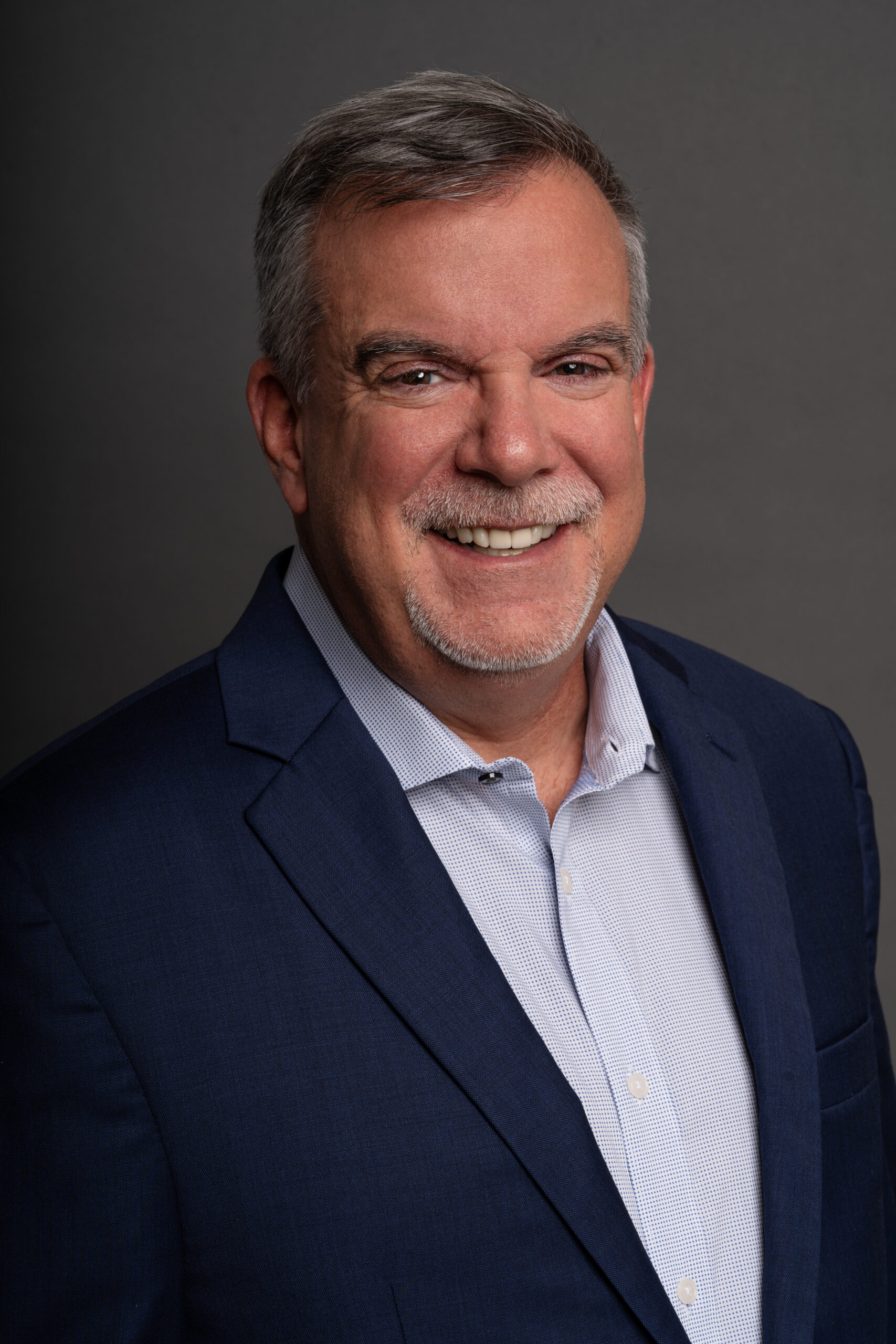 |
Charles Morris is president of Red Monarch, a Phoenix marketing agency serving the vision and medical device industries. He spent seven years at CooperVision as Global Brand Director for Myopia Management and Specialty Lenses. There he led brand and product strategy for the company’s specialty contact lens portfolio across global markets. He later served as general manager for North America at RevitalVision. Morris teaches marketing at Grand Canyon University and holds an MBA from North Central College. |
References
- Holden BA, Fricke TR, Wilson DA, et al. “Global Prevalence of Myopia and High Myopia and Temporal Trends from 2000 through 2050.” Ophthalmology. 2016;123(5):1036–1042.
- Wu PC, et al. “Increased Time Outdoors Is Followed by Reversal of the Long-Term Trend to Reduced Visual Acuity in Taiwan Primary School Students.” Ophthalmology. 2020;127(11):1462–1469.
- On trachoma as a model for the timeline from evidence to large-scale implementation, see World Health Organization, “WHO Alliance for the Global Elimination of Trachoma by 2020.”
Disclosures
Charles Morris is president of Red Monarch, a Phoenix-based marketing agency serving the vision and medical device industries. He was global brand director for myopia management and specialty lenses at CooperVision from 2016 to 2024. Red Monarch currently provides marketing services to Euclid Vision Group for the Be Free® Day lens, a myopia care contact lens based on a design developed by Brien Holden and the Brien Holden Vision Institute. Professor Kovin Naidoo is global head of advocacy and partnerships at the OneSight EssilorLuxottica Foundation, the philanthropic arm of EssilorLuxottica. Dr. Tom Aller consults for the Brien Holden Vision Institute and for Euclid Systems Corporation and other ophthalmic industry partners. Each source reviewed and approved only their own quoted material.