The science settled years ago and the toolkit is complete. What has not happened is the decision to use it.
September 8, 2026
By Charles Morris

Photo Credit: Getty Images
Behind Thomas Aller, OD, FBCLA’s, desk, a pane of glass on the wall is etched with a line from Thomas Edison: “Many of life’s failures are people who did not realize how close they were to success when they gave up.”
Dr. Aller, a California optometrist who consults for the Brien Holden Vision Institute and with vision industry partners, has been treating myopic children since before most of today’s myopia researchers finished their training. Forty-three years in practice. Bifocal contact lenses on kids when the orthodoxy said it wouldn’t work. Soft lenses at orthokeratology conferences that weren’t especially eager to hear it. He has been making the same argument for the better part of four decades: that the tools to slow myopia progression exist, the evidence is solid and the field keeps finding reasons not to use them.
Ten years after the Holden paper, he hasn’t changed his mind.
“We have all the tools to bend the curve,” he says. “But I doubt if we have in any meaningful way.”
The Interventions
His frustration isn’t with the science. The science, he’ll tell you, has been settled for years. It’s with the distance between what the evidence says and what happens in the exam room, a distance he finds somewhere between baffling and inexcusable.
“The interventions aren’t complicated,” he says. “The evidence isn’t ambiguous.” He’s blunter still: “Even a monkey can control myopia by 40%. It’s really that simple.”
It is a joke he has used from podiums for years, and its target is the bar, not the people standing beneath it. In the BLINK trial, published in JAMA in 2020, children wearing high-add center-distance soft multifocal lenses progressed roughly 43% less over three years than children in single-vision lenses.1 Forty percent is not the ceiling of what myopia management can achieve. It is the floor.
“I think people overthink it in my field,” Dr. Aller says. “The tools are there. The question is why we’re not using them.”
Moving Beyond the Idea of Specialists
His answer is structural. Myopia management in the United States has largely been the province of specialists: dedicated equipment, extended appointment times, a patient base that seeks them out. The result is a system where the children most likely to be treated are those whose families already knew to look for it.
He thinks that’s backwards.
“Generalists exist for a reason,” he says, “because they treat more people when there’s fewer barriers for those treatments.” His model is tiered. Every optometrist screens, counsels and initiates basic intervention. Mid-tier practitioners manage atropine and multifocal contact lenses.2 Specialists handle the complex cases. No specialty workup. No additional equipment. No reason to wait.
“If you could make it as routine as fluoride in the water supply,” he says, “you’d never have a −6.00D myope. The question the field needs to sit with is why we’re treating that as an aspiration rather than a goal.”
Providing the Avalable Treatments
The decade did its part. In November 2019 the FDA approved the first soft contact lens indicated to slow the progression of myopia in children.3 And in September 2025, nearly a decade after the Holden paper, the FDA authorized the first spectacle lens for the same indication.4
The toolkit had arrived. What it could not answer was who was using it.
Surveys disagree on that, and the disagreement is the more useful finding. A 2023 practice survey found that fewer than one in five practitioners were truly offering myopia management. An industry survey two years later, asking a different question of a different sample, put the share who say they offer it near 70%.5 The distance between saying you offer a service and actually providing it is the whole argument.
Dr. Aller is not surprised either way. “The barriers were built in,” he says. Specialty training, dedicated instrumentation, extended chair time and for years an authorization gap that left practitioners without approved options. Reimbursement gave them little reason to add a time-intensive service to an already pressured schedule.
The Will to Use the Tools
All of which describes one country. Ask Professor Kovin Naidoo whether the toolkit arrived, and the answer depends entirely on where you are standing when you ask. Naidoo succeeded Brien Holden as chief executive of the Brien Holden Vision Institute and is now global head of advocacy and partnerships at the OneSight EssilorLuxottica Foundation.
“We can have the best myopia control tools,” he says. “If we don’t have critical mass which will lower the cost, or create alternative, more affordable options, it’s never going to serve the developing world.”
What the decade built was a complete arsenal. In the United States the problem was never the weapons. It was the will to use them. In most of the world the will was never in doubt. The arsenal simply never arrived.
“We have the tools,” Dr. Aller says. “We just haven’t made the decision.”
Read part one of this three-part article series here.
Download a PDF of a full 10-year retrospective of the BHVI paper here.
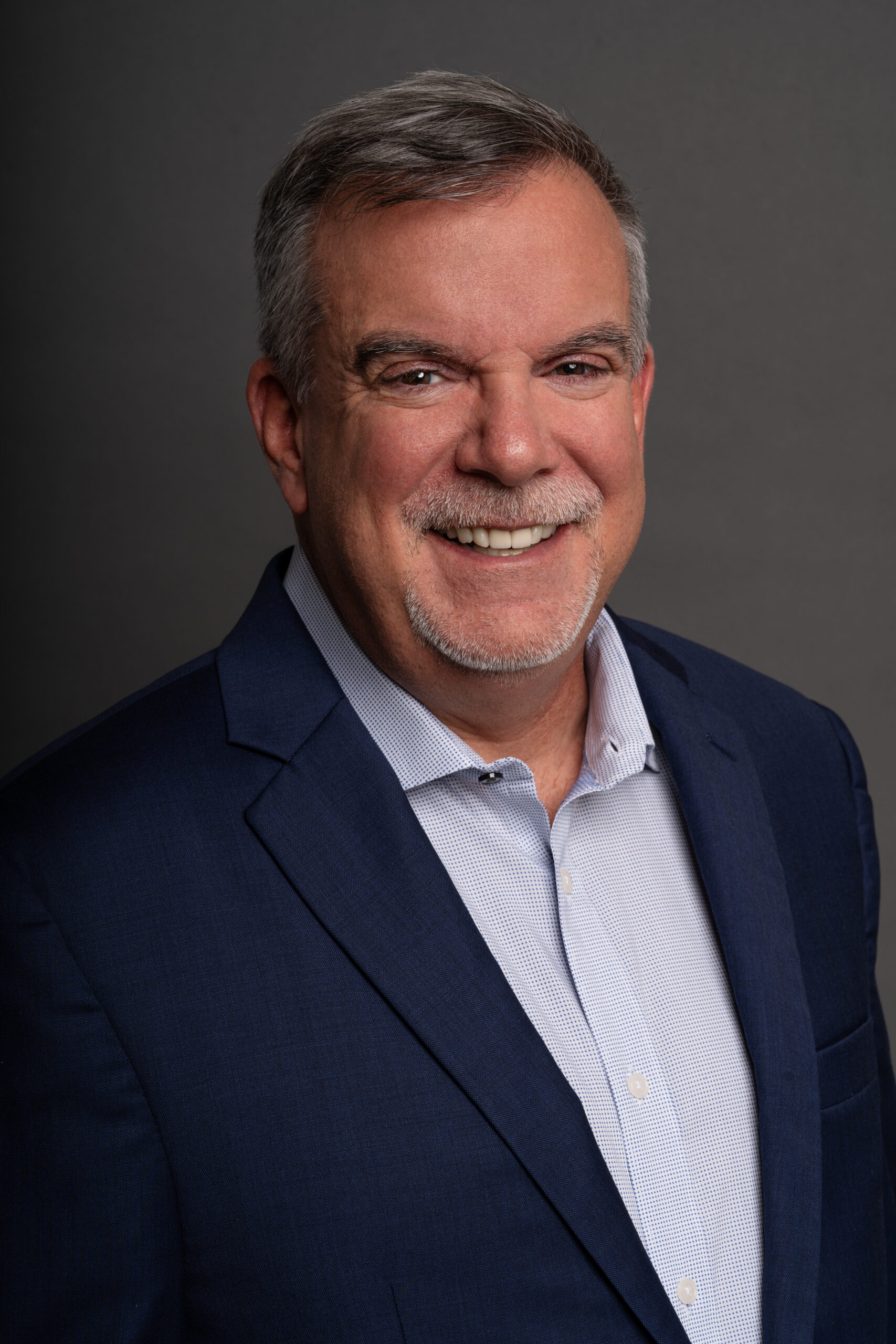 |
Charles Morris is president of Red Monarch, a Phoenix marketing agency serving the vision and medical device industries. He spent seven years at CooperVision as Global Brand Director for Myopia Management and Specialty Lenses. There he led brand and product strategy for the company’s specialty contact lens portfolio across global markets. He later served as general manager for North America at RevitalVision. Morris teaches marketing at Grand Canyon University and holds an MBA from North Central College. |
References
- Walline JJ, Walker MK, Mutti DO, et al. “Effect of High Add Power, Medium Add Power, or Single-Vision Contact Lenses on Myopia Progression in Children: The BLINK Randomized Clinical Trial.” JAMA. 2020;324(6):571–580.
- The multifocal lenses used in the BLINK trial were commercially available presbyopic lenses prescribed off-label, as low-dose atropine is. This content is provided for educational and informational purposes only and is not intended to promote off-label use. Readers should seek their own guidance regarding off-label treatments.
- U.S. Food and Drug Administration. “FDA Approves First Contact Lens Indicated to Slow Progression of Nearsightedness in Children.” FDA News Release. November 15, 2019.
- U.S. Food and Drug Administration. “FDA Authorizes Marketing of First Eyeglass Lenses to Slow Progression of Pediatric Myopia.” FDA News Release. September 25, 2025.
- DiMarco A, Chow A, Acs M, et al. “Myopia in Practice (MIP) Study.” American Academy of Optometry. 2023. Poster No. 235334.
Disclosures
Charles Morris is president of Red Monarch, a Phoenix-based marketing agency serving the vision and medical device industries. He was global brand director for myopia management and specialty lenses at CooperVision from 2016 to 2024. Red Monarch currently provides marketing services to Euclid Vision Group for the Be Free® Day lens, a myopia care contact lens based on a design developed by Brien Holden and the Brien Holden Vision Institute. CooperVision MiSight 1 day, cited in reference 3, is a product of the author’s former employer. Essilor Stellest, cited in reference 4, is a product of EssilorLuxottica. Dr. Tom Aller is a consultant to the Brien Holden Vision Institute and consults with Euclid Systems Corporation and other ophthalmic industry partners. Professor Kovin Naidoo is global head of advocacy and partnerships at the OneSight EssilorLuxottica Foundation, the philanthropic arm of EssilorLuxottica. Each source reviewed and approved only their own quoted material.
Read more public health articles here