September 14, 2026
By Ashley Tucker, OD, FAAO, FSLS
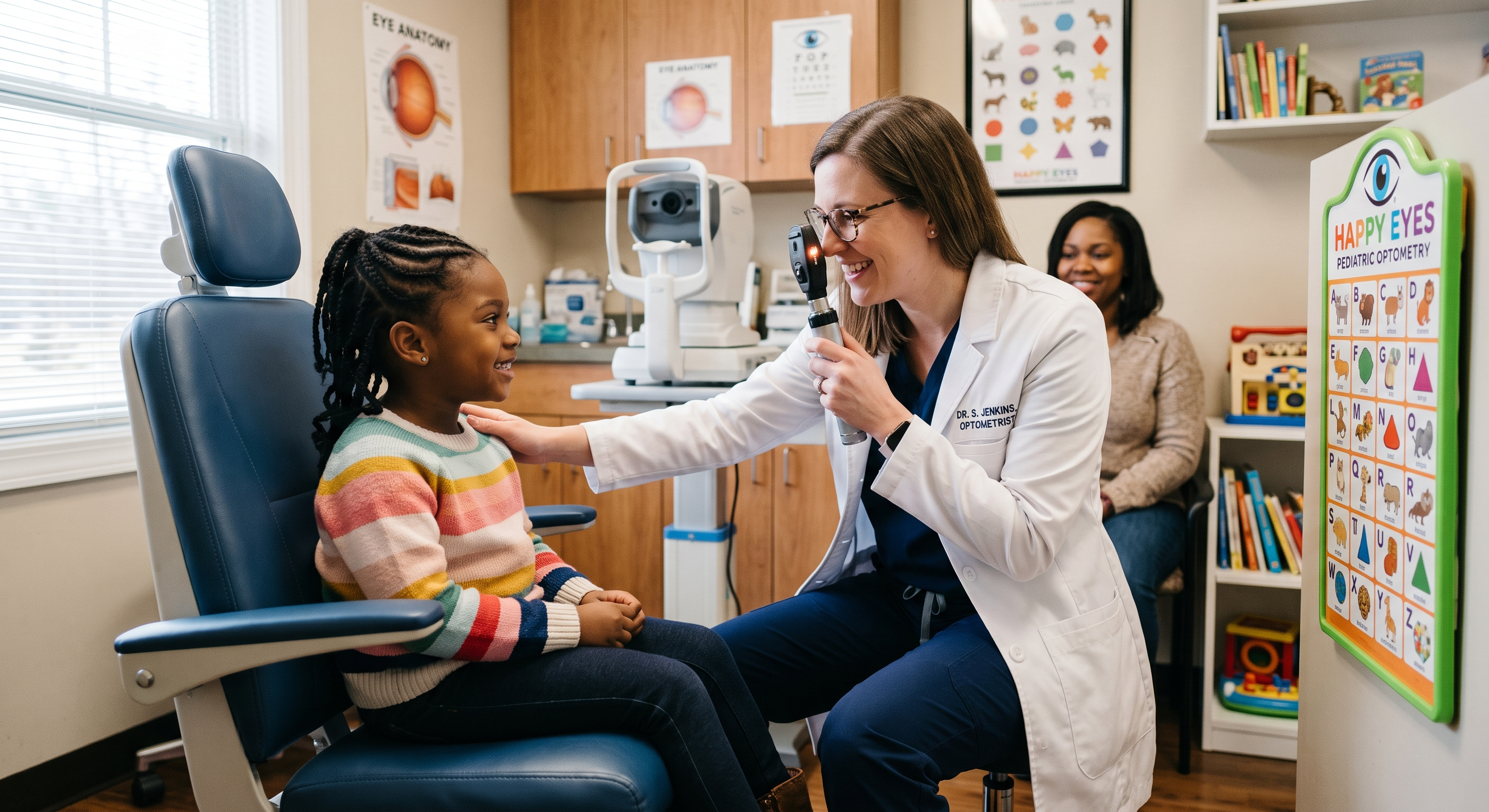
Image generated with AI
For years, those of us in myopia management have been trying to change the conversation. Myopia is not simply blurry distance vision or a refractive error that requires a stronger pair of glasses every year. It is associated with structural changes to the eye and increased lifetime risk of ocular disease. More importantly, for many of our young patients, it is something we have an opportunity to influence.
Earlier this summer, the American Medical Association (AMA) quietly took a significant step in the way myopia is viewed in the United States. In June 2026, the AMA House of Delegates adopted Resolution 411, supporting efforts to formally classify myopia as a disease. Earlier this month, the American Academy of Ophthalmology, the organization that introduced the resolution, brought renewed attention to that decision with a formal press release. The resolution also supported appropriate treatment and insurance coverage for myopia as a medical condition, including reimbursement for evidence-based treatments demonstrated to slow progression in pediatric and adolescent patients.
My first thought when I read the news was not simply, “Finally.” It was: “Now what?” Because if we want myopia recognized as a disease, we also have to be prepared to treat it like one.
More Than a Change in Terminology
For decades, myopia has largely been approached as a refractive inconvenience: measure the prescription, correct the vision and come back next year. But calling myopia a disease fundamentally changes that conversation.
If a child returns year after year with increasing myopia, are we simply updating a prescription, or are we documenting progression? Are we telling parents that their child’s vision changed, or explaining why that change matters? Are we discussing evidence-based interventions, or waiting for families to ask about them?
Perhaps the more uncomfortable question is this: If we recognize progressive myopia as a disease, when does doing nothing become difficult to justify?
A child can see 20/20 in a new pair of glasses while the underlying myopia continues to progress. Correction and management are not the same thing. Today, we have multiple evidence-based interventions capable of slowing progression, better tools to identify children at risk and increasing access to axial length measurement. That does not mean every child requires the same treatment or that every progressing myope needs the most aggressive intervention available. Individualized clinical judgment remains essential, but progression should at least trigger a conversation about risk, monitoring and available treatment options.
Recognition Must Also Mean Access
One of the most consequential parts of the AMA resolution may actually be its attention to insurance coverage. For many families, myopia management remains primarily an out-of-pocket expense, creating an uncomfortable reality in which our ability to recommend treatment may exceed a family’s ability to access it. Formal disease classification will not solve that problem overnight, but recognition by organizations like the AMA could help move myopia management toward broader coverage and hopefully appropriate reimbursement.
If myopia management is going to evolve from a specialty service offered by some practices into a routine component of pediatric eyecare, access has to evolve with it. Disease recognition has the potential to change not only how clinicians talk about myopia, but also how parents, healthcare systems and insurers value its treatment.
Now Comes the Responsibility
For years, the myopia management community has asked the rest of healthcare to recognize what we see every day: myopia deserves more attention than a stronger prescription. Now, one of the most influential medical organizations in the United States is adding its voice to that effort. That recognition is worth celebrating, but it also raises the bar for us.
If we advocate for myopia to be recognized as a disease, our responsibility cannot end with correcting the blur. We must identify risk, monitor progression, educate families, discuss appropriate interventions and advocate for access to care.
The AMA resolution may ultimately help change reimbursement, increase public awareness and accelerate the integration of myopia management into routine pediatric eyecare. However, its most immediate impact should perhaps be much simpler: making each of us reconsider what happens when the next progressing myope sits in our chair.
Read more from our Medical Co-Editors here