Myopia management is more than choosing a treatment
Septemer 8, 2026
By Aamena Kazmi, OD, ABO Diplomate

Photo Credit: Getty Images
One of the biggest changes in my approach to pediatric eyecare has been learning to think of myopia as something to manage rather than simply correct.
For years, the routine conversation was relatively straightforward: determine the prescription, prescribe glasses or contact lenses and bring the child back in a year. As our understanding of myopia progression has evolved, that approach no longer feels sufficient for many children.
Today, when I diagnose a child with myopia, I am thinking about several questions at once:
- How quickly is this child progressing?
- What is their risk of continued progression?
- What treatment options are appropriate?
- And, perhaps most importantly, what treatment will this particular child and family actually use?
That last question is where real-word experience becomes especially important.
There are excellent clinical studies demonstrating the efficacy of different myopia management strategies. But in practice, treatment success depends on more than efficacy under controlled conditions. It depends on whether a child will wear the treatment, whether parents understand what it is supposed to accomplish, whether the treatment fits into the family’s lifestyle and whether the practice can deliver and monitor it consistently.
For these reasons, adding myopia spectacle lenses to the clinical toolbox has been an interesting experience–not simply because of the lens technology itself, but because of what happens when that technology meets real children, real parents and the realities of a busy optometric practice.
Why Add a Myopia Control Spectacle Option?
When building a myopia-management program, I believe it is important to have multiple treatment options rather than trying to fit every child into one treatment modality.
Some children and families are enthusiastic about contact lenses. Others are not.
Some children are excellent candidates for orthokeratology. Others are not ready for it.
Some families are comfortable with pharmacological treatment. Others prefer an optical approach.
And some children simply want to wear glasses.
That is one of the reasons spectacle-based myopia management is appealing. The child and parents already understand glasses. There is no insertion and removal routine, no lens care regimen and no requirement that a child become comfortable touching their eyes.
In addition, Stellest provides another option for children for whom a spectacle-based approach makes sense. The technology uses a central distance-vision zone surrounded by highly aspherical lenslets designed to create a treatment signal while maintaining clear vision through the central portion of the lens.
The clinical evidence supporting highly aspherical lenslet spectacle lenses has continued to develop, including randomized clinical trials and longer-term follow-up. Real-world data are also beginning to provide insight into how these lenses perform outside the controlled environment of a clinical trial.
For the practicing optometrist, however, the more interesting question is: What does it actually take to make this work in practice?
Explaining A Spectacle-Based Treatment Approach to Parents
The technical explanation of highly aspherical lenslets can become complicated very quickly. However, most parents do not need to understand every detail of the optical design.
They need to understand three things:
- The center of the lens provides their child’s prescription and clear distance vision.
- The lens incorporates additional optical elements designed to help slow myopia progression.
- The child needs to wear the lenses consistently for them to be an effective treatment strategy. Essilor’s current recommendation for Stellest lenses is at least 12 hours per day, every day. The more consistently the lenses are worn, the better the myopia-control efficacy.
My explanation is intentionally simple:
“These look and feel like glasses, but they are doing more than just correcting the prescription. The center gives your child clear vision while the treatment portion of the lens is designed to help slow the eye’s progression into more myopia.”
This usually leads naturally into a discussion about expectations. I emphasize that we are trying to slow progression, not eliminate it.
That distinction prevents one of the biggest potential misunderstandings in myopia management: a prescription change does not automatically mean that treatment has failed.
Choosing the Right Child
For an established or developing myopia management practice, adding myopia control spectacles can encourage the practice to formalize its treatment algorithm. A useful question to ask is: “When is the spectacle approach the most appropriate option for this patient?” A treatment discussion might consider:
- Age
- Lifestyle
- Spectacle-based preference
- Contact lens readiness
- Family preferences
- Age and maturity
- Ocular health
- Ability to comply with treatment modality
The Frame is Part of the Treatment
One of the practical lessons that becomes clear very quickly is that prescribing a myopia control spectacle lens is not simply a matter of putting the prescription into the lens. The frame matters.
A child can have an excellent lens design and an accurate prescription, but if the frame slides down the nose, sits crooked or is constantly being pushed up, the experience is unlikely to be ideal.
This makes the optical component of myopia management particularly important. Frame fitting is treatment delivery.
I ask my opticians to pay close attention to:
- Frame stability
- Bridge fit
- Lens size
- Lens centration
- Pupil positioning
- Vertex distance
- Pantoscoptic angle
- Temple adjustment
- Overall comfort
- The child’s ability to keep the frame in its intended position
The goal is to make sure that the lens remains appropriately positioned during normal daily wear–not simply when the child is sitting in the optical chair.
I also want the child to like the frame. That may sound like a minor consideration, but it is not. A child who loves their glasses is more likely to wear them. A child who hates their glasses may find reasons not to wear them. In my experience, compliance begins with frame selection.
Preparing the Child for the Adaptation Period
One of the most effective ways to improve the patient experience is to prepare both the child and parents for adaptation before glasses are dispensed.
Rather than simply telling a child simply, “These are your new glasses,” the conversation can be framed around the purpose of the treatment: “These glasses are designed to help you see clearly and also help slow down how quickly your nearsightedness changes.”
Families sometimes worry that a child will notice the lenslets or experience blur outside the central zone. The clinical evidence is reassuring: trials have reported good adaptation, with no significant adverse visual complaints or discomfort attributable to the lens design in the study populations.
Nevertheless, clinicians should prepare families for an adaptation period. Some children may notice visual phenomena, such as mildly blurred vision or halos, during the initial adaptation period. The expected adaptation period for Stellest lenses is typically one week or less.
This makes the pre-dispensing conversation important. If a parent is told in advance that adaptation can occur, a transient visual complaint is less likely to be interpreted as evidence that the lens is unsuitable.
Lastly, children should be encouraged to wear the new glasses consistently rather than repeatedly switching between the myopia-control pair and an old single-vision pair.
The Optical Team as an Extension of the Clinical Team
One of the most valuable lessons from incorporating myopia control spectacle lenses into practice is that successful treatment requires collaboration.
The optometrist establishes the diagnosis, assesses risk, determines the strategy and monitors progression. The optical team helps translate that strategy into daily use.
They can identify whether:
- The child is comfortable
- The frame is slipping
- The child is removing the glasses
- The parents are confused about wear instructions
- The child is struggling with adaptation
- The child is looking through the optical center of the lenses
- A replacement or adjustment is necessary
The optical staff does not need to become myopia management specialists. They do, however, need to understand enough about the treatment to confidently reinforce the doctor’s recommendations.
At a minimum, the team should be able to answer:
- What are these lenses for?
- Why does the child need to wear them consistently?
- Are these regular glasses? What makes them different?
- What if the child notices something different initially?
These seemingly small details can have significant implications for treatment adherence. The goal is for the child and parents to hear a consistent message throughout the office.
A myopia management program, therefore, works best when the entire office understands that the optical dispensing process is part of the treatment—not merely the final step after the clinical encounter.
Consistent Myopia Follow-Up Protocol
Adding Stellest should not require the practice to completely reinvent its follow-up schedule. Due to Essilor’s warranty window, our practice is currently implementing quarterly recalls.
If the practice already has a standardized myopia management protocol, a spectacle- based treatment plan can be incorporated into that system.
The same principles apply:
- Document baseline refractive status
- Monitor progression
- Measure axial length when available
- Assess compliance
- Ask about visual comfort
- Evaluate frame fit
- Discuss wear time
- Reinforce environmental and behavioral recommendations
- Adjust treatment when clinically indicated
Conclusion
The real-world success of myopia management depends on more than optical design. Appropriate patient selection, accurate fitting, comfortable frames, consistent wear, effective parent education and coordinated follow-ups are all essential.
The optical team plays a particularly important role. For practices accustomed to prescribing contact lens-based myopia management, fitting is already recognized as an important part of treatment. With a spectacle-based treatment, it can be tempting to think of fitting as simpler because there is no contact lens on the eye. However, such is not the case. The optician’s fitting process for glasses is just as important. By understanding the clinical objective, paying careful attention to fitting and frame stability and reinforcing the importance of consistent wear, the optical staff becomes an active participant of myopia management.
Through my early experience, I have come to realize that successful myopia management with a spectacle-based approach not simply about prescribing lenses. It is about creating a treatment plan that the child can realistically live with every day and that the entire practice can consistently support.
The most effective approach is therefore one in which the science, the clinical examination, the optical dispensing process and the family’s understanding of treatment all work together.
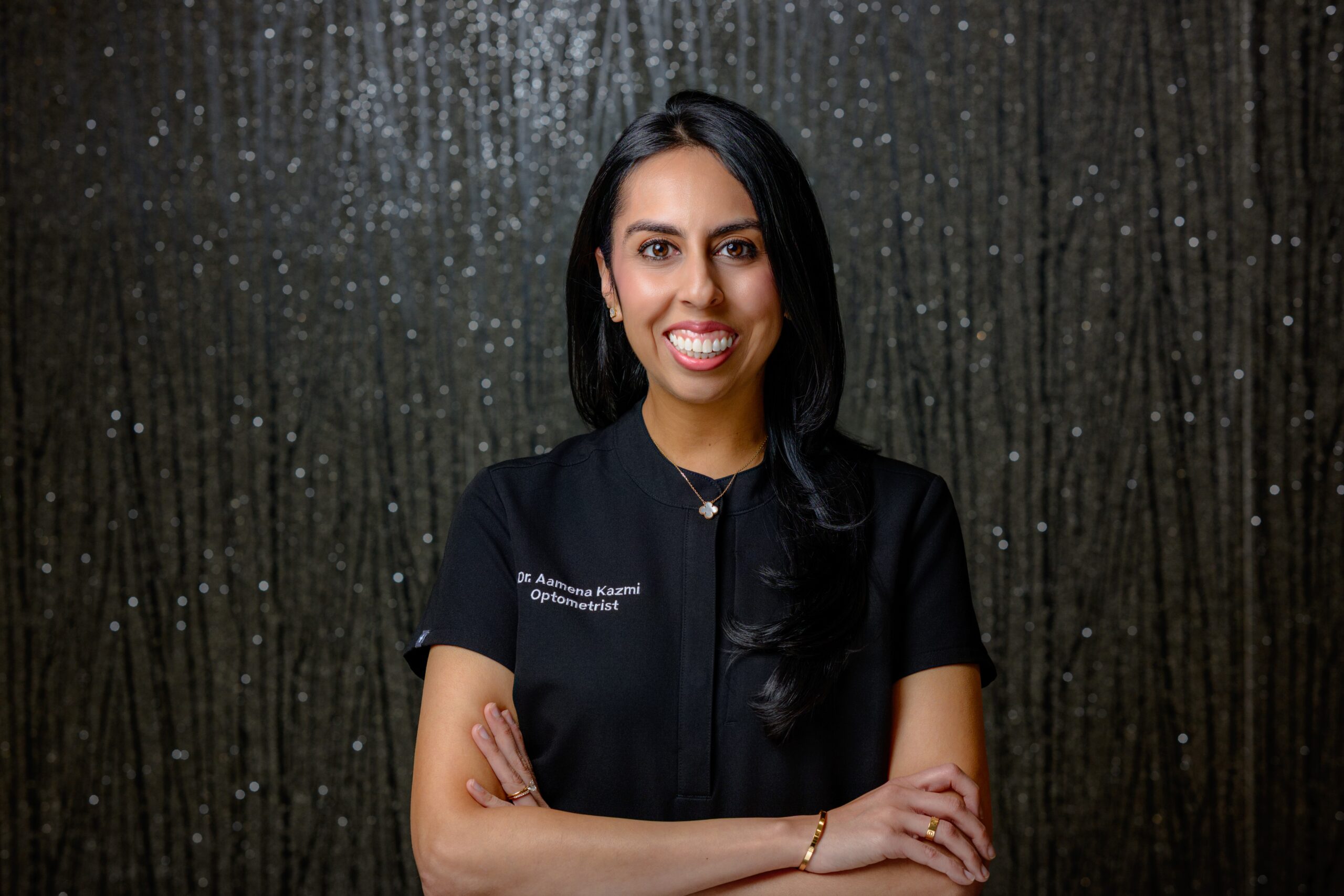 |
Dr. Aamena Kazmi graduated from the University of Houston College of Optometry in 2015, and she is currently a partner at Bellaire Family Eye Care, a private practice in the Houston, TX, area. She primarily manages patients in need of dry eye management, specialty contact lenses, and myopia control. In addition, Dr. Kazmi is a consultant for CooperVision. |
Read more practice management articles here