June 1, 2026
By Scott Panozza, OD

Photo Credit: Getty Images
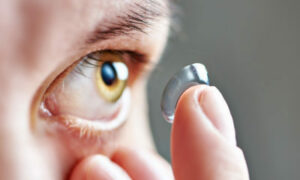
Effective myopia control relies upon sustained patient compliance to treatment regimes. Compliance in turn is enhanced by treatments that do not compromise on good visual quality. By generating myopic defocus through aspheric progressive or alternating concentric circle designs, multifocal soft contact lenses (MFSCLs) are one tool that have been shown to slow axial elongation in children.
This study by Li et al. examined the visual performance of MFSCLs under glare and non-glare conditions. The aim was to gain a better understanding of the functional impact of MFSCL wear to help inform clinical decisions when prescribing myopia management. Specifically, shape discrimination threshold (SDT) was measured in 37 myopic children (ages 8 to 13 years) and compared between MFSCLs and single vision spectacles.
Researchers evaluated uncorrected and corrected visual acuity, corneal curvature and dark-environment pupil diameter (PD), alongside SDT under both glare (SDTon) and non-glare (SDToff) conditions. Analyzing data from the right eye, they compared SDT scores across lens types and lighting conditions. They also assessed correlations with various ocular parameters.
Despite finding that glare reduces shape discrimination ability overall, the results showed no significant difference in SDT between MFSCLs and spectacles under both glare and non-glare conditions. This suggests that MFSCLs do not exacerbate disability glare compared to traditional glasses. Therefore, these findings support continued clinical use of MFSCLs in pediatric myopia control. It is important to note that real-world visual environments are more variable than the well-controlled glare simulation of this study. Future research efforts should consider the influence of different MFSCL materials and designs.
Abstract
Impact of Multifocal Soft Contact Lenses on the Shape Discrimination Threshold Under Glare in Myopic Children
Background
Multifocal soft contact lenses (MFSCLs) are widely used to control myopia progression in children. However, their optical design may affect visual quality, especially under glare conditions, potentially influencing their daily visual performance.
Purpose
To evaluate the impact of MFSCLs on shape discrimination threshold (SDT) under glare in myopic children by comparing changes in SDT under glare and non-glare conditions, with both MFSCLs and single vision spectacles.
Methods
Thirty-seven myopic children (37 eyes) were enrolled and fitted with both MFSCLs and single vision spectacles for binocular myopia correction. Assessments included uncorrected and corrected visual acuity, corneal curvature, pupil diameter (PD) in a dark environment, and SDT with glare (SDTon) and without glare (SDToff). Measurements of the right eye were analyzed. SDTs were compared between lens types and lighting conditions, and correlations with ocular parameters were evaluated.
Results
All participants achieved optimal MFSCL fit. No significant difference in SDTon or SDToff was observed between MFSCLs and spectacles (P > 0.05). However, SDTs were significantly elevated under glare compared to non-glare conditions (P < 0.001). In the MFSCL group, SDTon was significantly correlated with PD in the dark (r = 0.336, p = 0.042), as was the glare-induced SDT change (SDTdiff; r = 0.354, p = 0.032). In the spectacle group, SDTdiff was significantly associated with spherical equivalent refractive error (r = 0.435, p = 0.007). No serious adverse events occurred, and mild corneal staining resolved with appropriate care.
Conclusion
MFSCLs did not significantly worsen SDTs under glare in myopic children compared to spectacles, suggesting they do not exacerbate disability under glare. These findings support the continued clinical use of MFSCLs for myopia management without compromising visual performance under glaring conditions.
DOI: 10.3389/fmed.2025.1635583
 |
Scott Panozza, OD, (he/him) is a clinical optometrist who graduated from The University of Melbourne. He has a background working across both public and private sectors, and is the current manager of contact lens services at The Australian College of Optometry (ACO Eye Health). |
Read more of the latest myopia research here