June 22, 2026
By Nikita Katoozi, OD, MEd-VFL
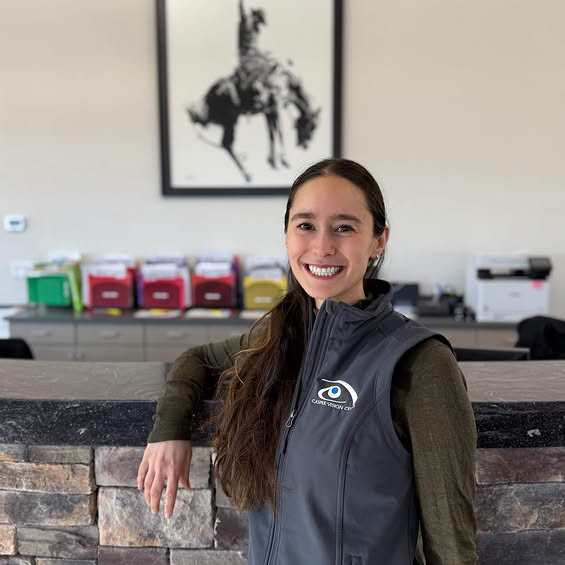
Photo provided by Dr. Katoozi
My playbook for building a myopia practice in an existing practice has grown through trial and error. I’ve recently moved to rural Wyoming, and this is essentially the third time I have started a myopia management program from scratch. Each time I move and begin again, I learn something new about what it takes to make the work accessible, sustainable and integrated into community care.
My journey with the Myopia Collective, an initiative of the American Optometric Association and CooperVision, began when it was first introduced in early 2024. I signed up because I saw an opportunity to help build community knowledge among colleagues and among families. At the time, I had just moved from a suburb in Minnesota to rural Washington. There was almost no awareness of myopia management there. Pediatricians and family medicine clinicians simply did not know what to ask, and parents had never heard that there were approved, evidence-based options for slowing myopia progression.
That gap is what makes rural practice so rewarding and so challenging. Rural clinicians see everything from primary care to more specialized services. We co-manage with specialists over the phone. If we don’t offer the services, our patients typically drive three hours to Colorado or South Dakota. With few to no myopia management providers in the area, children lose an opportunity to reduce their future risk of high myopia and related complications. For me, that makes having the conversation part of standard of care. Whether every practice chooses to offer every option is another matter, but we should at least be informing families of the choices.
Understanding the demographics
In Minnesota, I made inroads in educating patients about myopia management. When my husband, who was in his medical training, and I moved to rural Washington, we moved into an agricultural community where many patients were older. Children in rural areas typically spend more time outdoors here, so I was a little worried about the prevalence patterns.
I focused on outreach because there wasn’t the same word-of-mouth network that exists in urban centers. I made pamphlets and handouts, I visited pediatric and family medicine offices and I went to schools for in-service days and PTO events. The goal was to get a few key words—myopia, myopia management—into local searches and conversations. Once parents began to see the terms and hear the message, they started asking.
Prioritizing Education
Now we’re settled in Wyoming as of earlier this year. Each time I begin all over offering myopia management services, I go through the same curve. But it becomes easier. It can be intimidating to be the first in the community to offer a new service, especially one that requires patient (and staff) education. Questions about pricing, OrthoK fitting and referral pathways create uncertainty for staff and for clinicians. To overcome that, I try to remove as many barriers as possible.
I create clear handouts that explain options and outcomes. While I’m still new to this practice, in the earlier practices, I designated a point person in the clinic who knows the program inside and out. That person might be an optician, an intake and refraction tech or an office manager. Having a go-to team member eliminates the need for every staffer to answer complex questions on the spot. It also keeps pricing conversations consistent, which makes parents more comfortable.
I offer the full range of options I can—specialty contact lenses, orthokeratology, low-dose atropine and now approved spectacle options. The availability of FDA-approved spectacle lenses proven to slow the progression of myopia provide a low barrier of entry to patients and practices interested in myopia management.
In rural settings, the ability to offer care locally matters. Families I’ve met in Wyoming tell me they dread long drives for medical, just as I did as a mom when we lived in rural areas. When we can provide effective care in their community, it changes the calculus for families and keeps children in treatment.
Stick with it
Part of the work is simple persistence. I keep talking to parents at every visit, follow up with primary care offices and ask schools to include vision in their conversations. The uptake rate in each practice will be different, just as the local culture is different
I’m delighted to have landed in a rural practice where we have an opportunity to fill gaps in care. My ultimate goal is that myopia management becomes as routine as prescribing contact lenses or recommending sunglasses. Every eyecare visit includes a conversation about risk and options for children.
 |
Dr. Katoozi earned both her OD degree and her Master of Education with a focus in visual function and learning at Pacific University. She now practices at Casper Vision Center in Casper, Wyoming. |